Cape Town Pool Costs Explained: How Salt Air, Wind and Water Restrictions Change Your Budget
Why two identical pools can cost very different amounts depending on where in the Mother City they are being built — and how to budget realistically from the start.
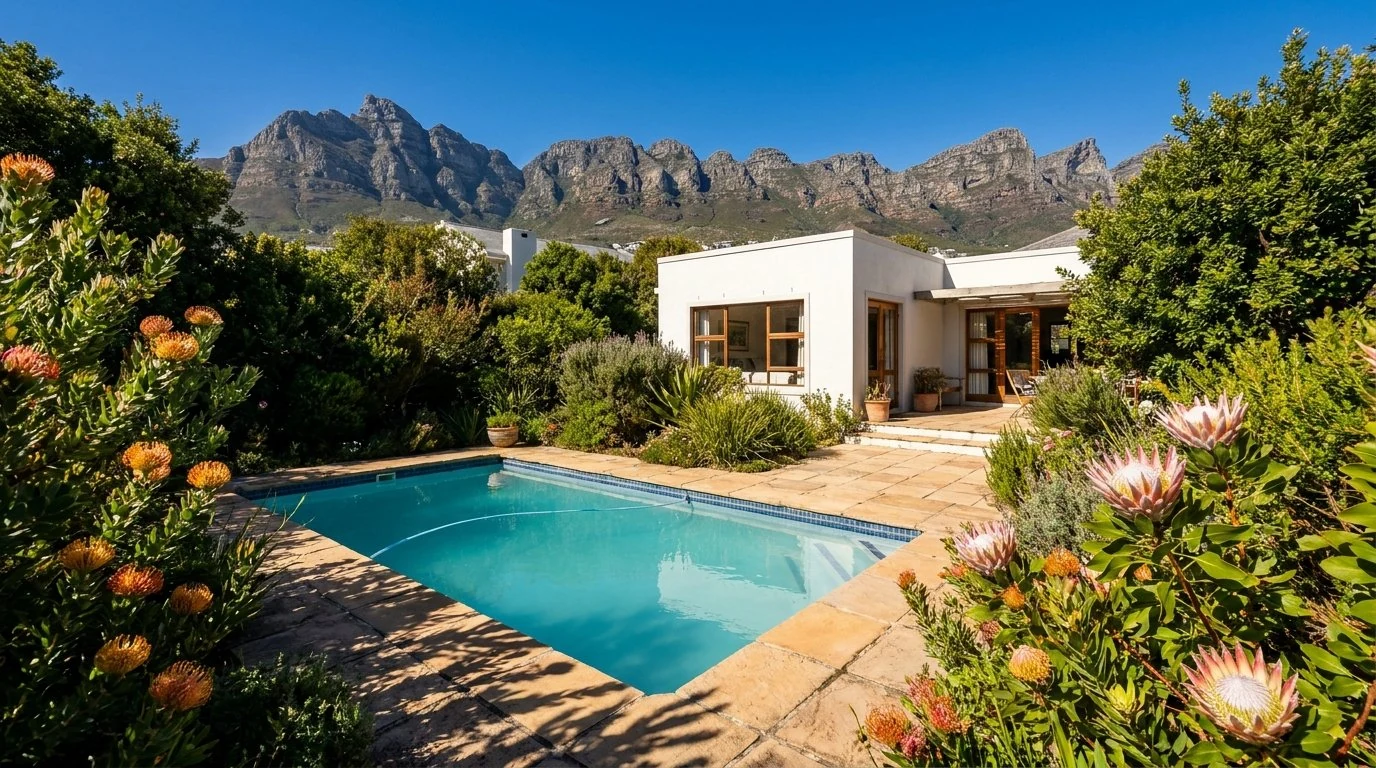
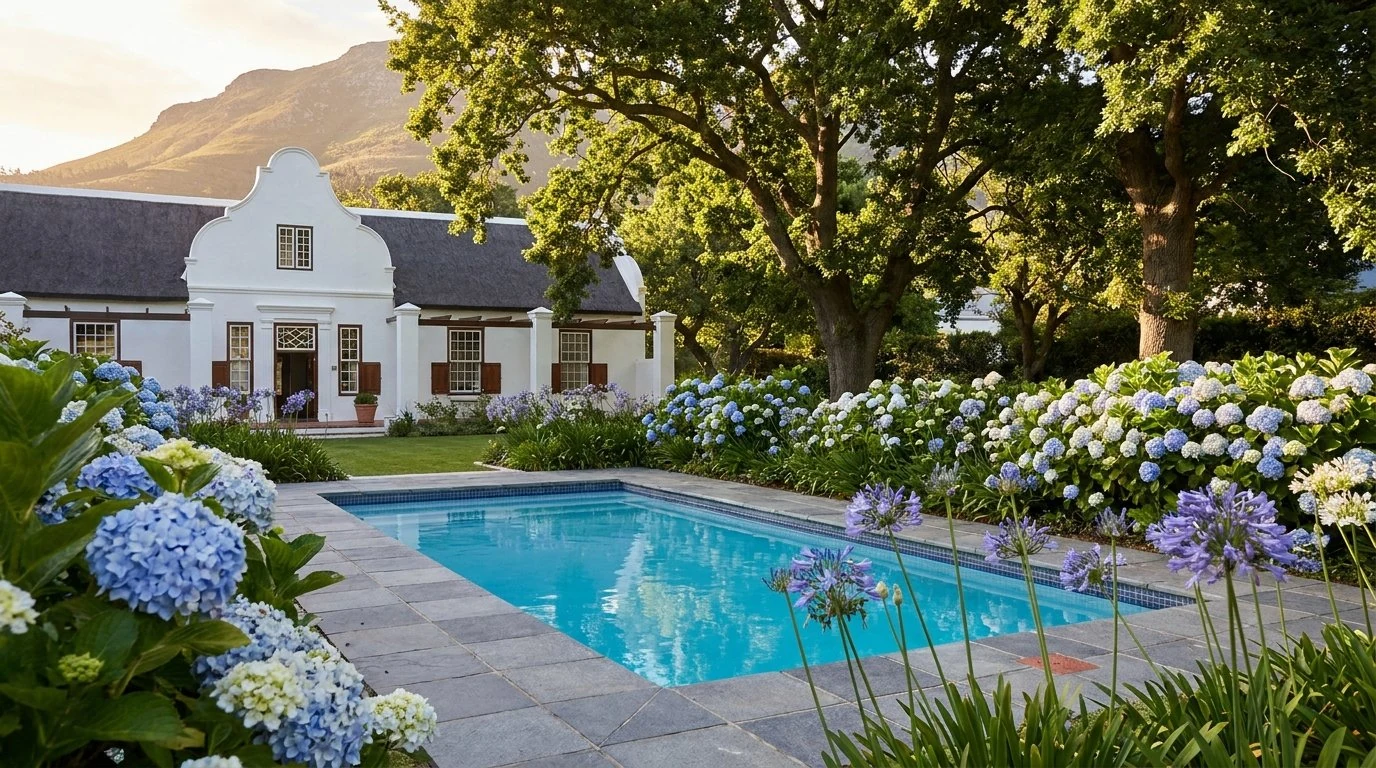
Building a pool in Cape Town comes with a different set of cost drivers than building one inland. Coastal air, strong winds, exposed sites, and water-conscious design all influence the materials, equipment, and finishes that make sense for your property. That means two pools of the same size can have very different budgets depending on where in Cape Town they are being built. In this guide, we explain the local factors that change pool costs in the Mother City and how homeowners can budget more accurately from the start.
For broader regional context, pair this with the Cape Town pool construction research page, and use our pool cost calculator for a working budget.
Why Cape Town pool budgets differ
Cape Town pool costs run roughly 5–15% higher than the national average for an equivalent build. Three structural factors drive that premium:
- Logistics: Most fibreglass shells are manufactured in Gauteng or KZN. Trucking a shell to the Western Cape adds R12,000–R28,000 before the build even starts.
- Terrain: Atlantic Seaboard, Hout Bay and parts of the Winelands sit on Table Mountain Sandstone or granite. Rock excavation can add R30,000–R120,000 to a quote that looked straightforward on paper.
- Specification creep: Coastal-appropriate materials (mosaic finishes, marine hardware, composite fencing) are not optional upgrades on exposed sites — they are the only specs that survive past year five.
Coastal corrosion and material choices
Salt aerosol carries inland from the Atlantic and False Bay coastlines for several kilometres. Within 2 km of the coast, standard galvanised hardware, marbelite finishes and budget pool equipment fail noticeably faster — often inside the warranty window. Specifying marine-grade alternatives upfront is almost always cheaper than replacing them later.
Marine-grade 316 stainless hardware
Replaces standard galvanised fittings within 2 km of the coast. Adds R3,500–R9,000 to a typical build but avoids 2–4 year replacement cycles.
Glass mosaic or pebble interior finish
Outlasts marbelite by 5–10 years on exposed Atlantic Seaboard sites. Premium uplift of R45,000–R140,000 over plaster.
Powder-coated or composite pool fencing
Galvanised steel rusts within 18–36 months on coastal properties. Aluminium or composite barriers add R6,000–R18,000 but last the life of the pool.
Sealed pump housing & corrosion-resistant heat pump
Marine-rated equipment costs 15–25% more upfront but avoids early failures within 3–5 years on exposed sites.
For an interior-finish deep-dive, see the concrete pool construction guide. For shell-based options, the fibreglass pool guide covers gelcoat performance in coastal conditions.
Wind shelters, heating and usable swim time
The south-easter ("Cape Doctor") regularly hits 60–80 km/h on the Atlantic Seaboard between November and March. Without shelter, an exposed pool is unusable on roughly a third of summer afternoons. Cape Town also has cooler water temperatures than Gauteng or Durban, with most unheated pools dropping below comfortable swim range from May to September.
Realistic wind-and-heat budget items:
- Glass wind screens or louvred timber: R18,000–R65,000 depending on length and engineering. Often the highest-ROI item on an exposed site.
- Heat pump (residential 9–13 kW): R28,000–R55,000 installed. Extends usable swim season by 4–6 months.
- Solar-thermal panels: R22,000–R45,000. Cheaper running cost than heat pumps, but limited shoulder-season effect on cloudy Cape winters.
- Thermal pool cover or slatted cover: R6,000–R85,000. Reduces evaporation 60–80% — material to both heating and water-restriction line items.
Water-wise design and restriction-proof budgets
The City of Cape Town enforces a Level 1 water-restriction baseline year-round. Pools larger than 30 kL must have a cover, new fills require council notification, and Level 3+ restrictions — triggered every few drought cycles — prohibit municipal pool refills outright. Designing the pool to remain operable through future restrictions is now standard practice in the Western Cape.
- Borehole or well-point: R25,000–R80,000 depending on depth and yield. The single most common retrofit homeowners regret not budgeting upfront.
- Rainwater tanks (5,000–10,000 L): R8,000–R22,000 plumbed to top up evaporation losses.
- Auto-fill with leak detection: R3,500–R9,000. Catches slow leaks before they become 2,000 L/week disasters.
- Initial fill via tanker (drought scenarios): R1,500–R3,000 per 5,000 L delivery. Only relevant if you skipped the borehole.
For ongoing running-cost numbers in this region, the monthly pool running cost guide breaks down chemicals, electricity and water top-ups for coastal pools.
Cape Town budget scenarios by pool type
Indicative all-in ZAR ranges for new pool builds in greater Cape Town, including coastal-appropriate specifications:
| Scenario | Range |
|---|---|
Plunge / splash (≤4×2 m, fibreglass) Includes 10–15% Cape Town transport premium on shells trucked from Gauteng/KZN. | R125,000 – R180,000 |
Standard family (6×3 m, concrete + marbelite) Typical Northern Suburbs / Southern Suburbs spec. Salt chlorinator and basic cover included. | R195,000 – R290,000 |
Premium family (7–8 m, mosaic + heat pump) Glass mosaic, marine-grade hardware, thermal cover, heat pump for shoulder seasons. | R320,000 – R480,000 |
Atlantic Seaboard / luxury (rock site, infinity edge) Rock excavation R30,000–R120,000, glass tile, automation. Camps Bay, Clifton, Bantry Bay, Llandudno. | R500,000 – R1,200,000+ |
For premium-tier site planning, see the infinity pool design guide. Before signing any quote, work through the pool design brief explainer so coastal specifications are written into the contract — not negotiated mid-build.
Ready to build your Cape Town pool?
Get free quotes from verified pool builders in Cape Town, the Atlantic Seaboard and the Winelands. Compare specs, timelines and pricing in one place.
The most expensive Cape Town budgeting mistake
Accepting an inland-priced quote without coastal specs. A R220,000 quote with marbelite, galvanised fencing and standard pump equipment looks competitive — until year three, when R60,000–R120,000 of premature replacements arrive. Get the marine spec written in upfront, even if it means delaying the build by a quarter to save for the right finish.
Cape Town Pool Cost FAQ
Continue your research
Plan your Cape Town pool with the right specs
Lock coastal-appropriate finishes, water resilience and wind shelter into your design brief before any builder quotes.